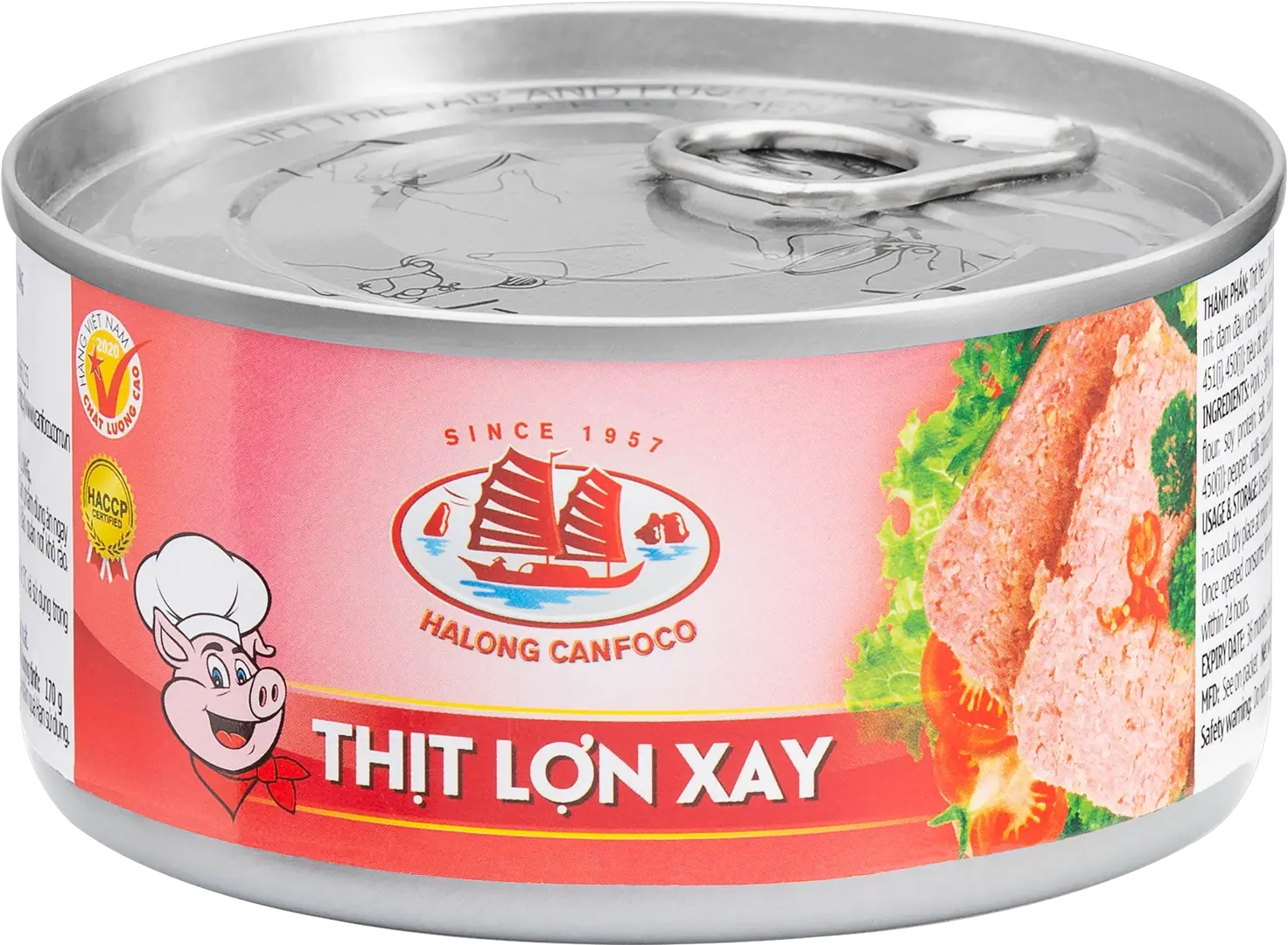
Halong Canfoco’s CEO and staff were detained after investigators found contaminated pork processed into pâté, spring rolls, and other products.

More than 130 tons of ASF-infected pork were discovered at a canning warehouse in Hai Phong, northern Vietnam.
Authorities confirmed that the contaminated meat was stockpiled at facilities belonging to Ha Long Canned Food JSC, widely known as Halong Canfoco.
Discovery and contaminated products
According to local media, in September last year, police intercepted two trucks carrying over 1.2 tons of pork lacking proper documentation and showing signs of disease.


Tests confirmed the meat was positive for ASF, and subsequent investigations uncovered approximately 130 tons of frozen diseased pork stored at Halong Canfoco’s warehouses. Authorities confirmed that the diseased pork was sourced from suppliers in Hung Yen province without legal documentation.
From the contaminated stock, the company had already processed over 1.7 tons of paté, equivalent to 14,000 cans. Other products also tested positive for ASF, including over 4 tons of crispy spring rolls and more than 3 tons of special spring rolls.
Laboratory tests further found more than 13 tons of frozen pork skin contaminated with ASF. They also detected over 6 tons of frozen chicken skin contaminated with Salmonella.
All contaminated meat and related products were destroyed in November 2025.
Following the discovery, many supermarkets and online marketplaces removed Halong Canfoco products from shelves.
Arrests and legal action
After four months of investigation, Hai Phong police charged nine suspects with trading food from diseased pigs.
On January 10, police also arrested Truong Sy Toan, CEO of Halong Canfoco. Investigators said he was directly involved in management decisions linked to handling diseased pork.
Three employees from the company’s Quality Management Department were also detained for failing to properly inspect incoming raw materials.
Company response
In response, Halong Canfoco issued a written explanation, stating that the violating raw materials were not used in production or supplied to the market.
The company said products currently in circulation comply with food safety regulations and are monitored under internal control processes.
It added that production and business operations remain stable despite the scandal.


Subscribe now to the technical pig magazine
AUTHORS

Bifet Gracia Farm & Nedap – Automated feeding in swine nurseries

The importance of Water on pig farms
Fernando Laguna Arán
Microbiota & Intestinal Barrier Integrity – Keys to Piglet Health
Alberto Morillo Alujas
Impact of Reducing Antibiotic use, the Dutch experience
Ron Bergevoet
The keys to successful Lactation in hyperprolific sows
Mercedes Sebastián Lafuente
Addressing the challenge of Management in Transition
Víctor Fernández Segundo
Dealing with the rise of Swine Dysentery
Roberto M. C. Guedes
Actinobacillus pleuropneumoniae – What are we dealing with?
Marcelo Gottschalk
The new era of Animal Welfare in Pig Production – Are we ready?
Antonio Velarde
Gut health in piglets – What can we do to measure and improve it?
Alberto Morillo Alujas
Interview with Cristina Massot – Animal Health in Europe after April 2021
Cristina Massot
Differential diagnosis of respiratory processes in pigs
Desirée Martín Jurado Gema Chacón Pérez