Chile seeks to expand its Asian footprint by exporting pork to Vietnam, reinforcing bilateral cooperation and sustainable trade practices.




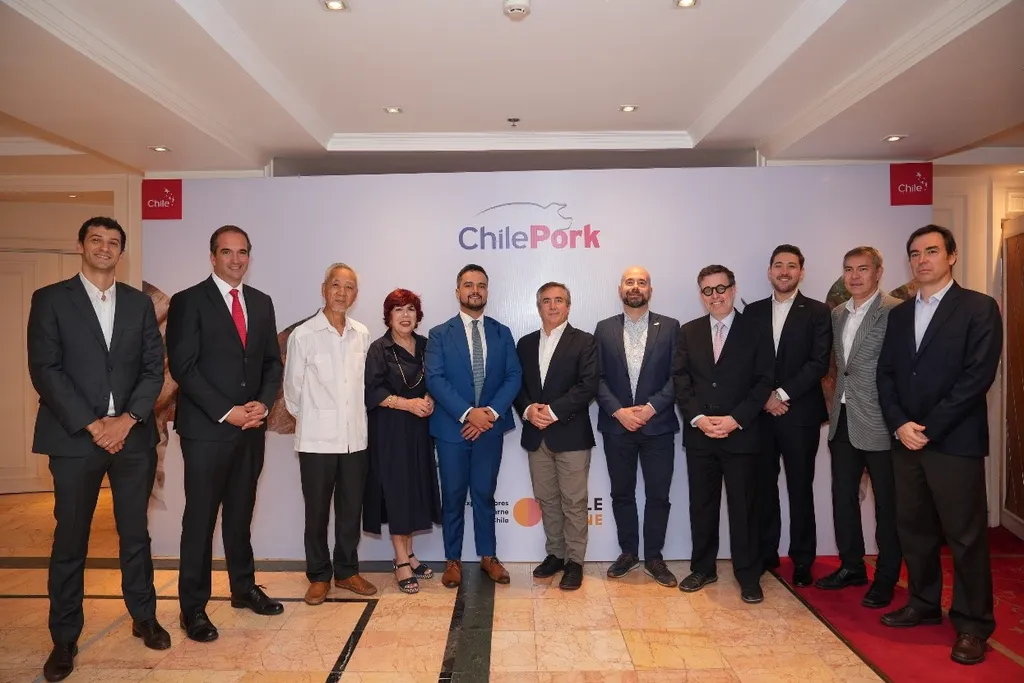
Chile, one of the world’s top five pork exporters, is making its final push to secure approval for pork exports to Vietnam. The South American nation already counts Vietnam among its strategic partners, with more than 55% of Chile’s food exports directed to Asia.
In 2024, Chile’s food and beverage exports reached USD 26 billion, including salmon, fruit, wine, poultry, and pork. Pork remains its largest meat export, with 60% of production destined for overseas markets.
Chile’s unique geography creates a ‘biosecurity island’, protecting livestock from diseases such as African swine fever (ASF) and porcine reproductive and respiratory syndrome (PRRS). Strict biosecurity standards and cooperation with the Agriculture and Livestock Service ensure disease-free production.
The pork industry operates under a vertically integrated model, controlling every stage from feed and breeding to processing and distribution. This guarantees 100% traceability and consistent supply.


Sustainability is a central pillar. About 95% of production meets Chile Origen Consciente standards, aligned with the UN’s Sustainable Development Goals. Over two decades, the industry reduced water use per animal by 69% and greenhouse gas emissions per pig by 24%. Advanced waste management now treats 82% of livestock waste, while clean energy integration continues to expand.
Chile’s pork initiative reflects broader economic ties with Vietnam. Chile has signed 35 free trade agreements with 65 economies, including Vietnam since 2014.
Consul Andrés Meza emphasized complementary relations: Chile offers expertise in mining and agriculture, while Vietnam contributes industrial dynamism, particularly in electronics. Agricultural Attaché Rosaura Campusano expressed optimism, noting Vietnam’s attractiveness as a destination and the importance of collaboration with the Ministry of Agriculture and Rural Development.
Juan Carlos Domínguez, President of ChileCarne, highlighted Asia as Chile’s main market and voiced hopes that Vietnam will soon join China, Japan, and South Korea as a key destination.
Once approval is granted, Chilean pork will enter Vietnam’s growing market, offering high-quality products produced under strict biosecurity and sustainability standards. The initiative underscores Chile’s commitment to responsible trade and Vietnam’s role as a priority partner in Asia.




Subscribe now to the technical pig magazine
AUTHORS

Bifet Gracia Farm & Nedap – Automated feeding in swine nurseries

The importance of Water on pig farms
Fernando Laguna Arán
Microbiota & Intestinal Barrier Integrity – Keys to Piglet Health
Alberto Morillo Alujas
Impact of Reducing Antibiotic use, the Dutch experience
Ron Bergevoet
The keys to successful Lactation in hyperprolific sows
Mercedes Sebastián Lafuente
Addressing the challenge of Management in Transition
Víctor Fernández Segundo
Dealing with the rise of Swine Dysentery
Roberto M. C. Guedes
Actinobacillus pleuropneumoniae – What are we dealing with?
Marcelo Gottschalk
The new era of Animal Welfare in Pig Production – Are we ready?
Antonio Velarde
Gut health in piglets – What can we do to measure and improve it?
Alberto Morillo Alujas
Interview with Cristina Massot – Animal Health in Europe after April 2021
Cristina Massot
Differential diagnosis of respiratory processes in pigs
Desirée Martín Jurado Gema Chacón Pérez


To provide the best experiences, we use technologies like cookies...