Agriculture groups argue expanded imports are unnecessary, stressing that domestic recovery and rising farmgate prices make the measure counterproductive for producers and consumers.





Philippine pig producers are urging the government to repeal the expanded pork import quota, saying domestic recovery makes the measure unnecessary.
The Samahang Industriya ng Agricultura (SINAG) has called for the repeal of Executive Order (EO) 116, which raised the minimum access volume (MAV) for pork imports from 54,210 tons to 204,210 tons.
The group warned that the increase undermines local producers and questioned its legal basis, noting that Congress holds authority over MAV adjustments. SINAG added that repeated reliance on imports risks weakening food security and discouraging investment in local production.
The Pork Producers Federation of the Philippines (ProPork) described the order as “unnecessary and counterproductive.”


“Recovery is not slow; in fact, farmgate prices are low because supply is high. Pork sales are sluggish and supply is abundant, so there is no reason to lower tariffs or increase MAV to 204,210 tons,” ProPork President Eric Harina told porciNews Asia.
He cited Philippine Statistics Authority (PSA) data showing pig production in 2025 reached 1.66 million tons liveweight, only slightly lower than 2024. Farmgate prices averaged USD 3.40/kg, while retail pork shoulder averaged USD 6.10/kg—both higher than the previous year. These figures, he said, reflect recovery rather than shortage.
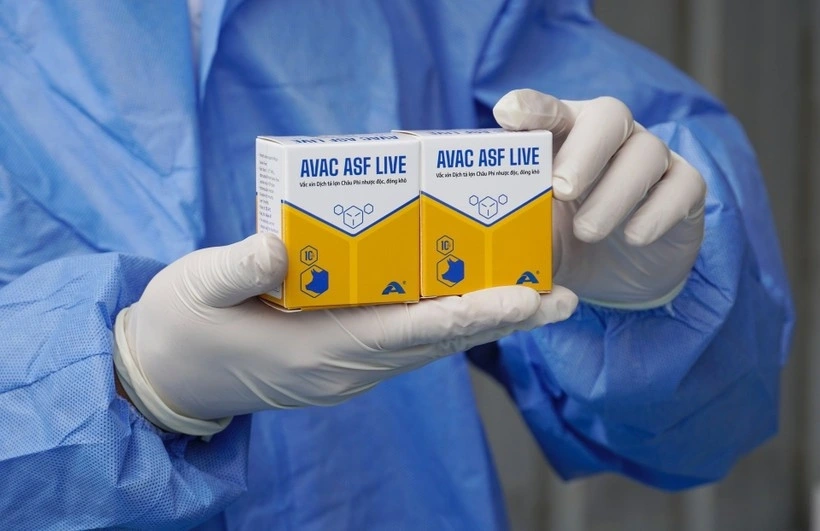
Mr Harina stressed that despite years of African swine fever (ASF) challenges, the industry is showing signs of stability, though government delays in repopulation programs and the absence of an ASF vaccine continue to hinder progress.
PSA data confirmed that pig production rebounded in Q1 2026, rising 6.4% to 428,920 tons liveweight. This marked the first quarterly increase after two years of decline.
Producers emphasized that the gains highlight industry resilience and challenge the rationale for higher import quotas.
Mr Harina argued that government support should focus on disease control and logistics rather than expanding foreign supply, noting that “significant recovery will only happen if producers are earning; otherwise, they will hesitate to repopulate.”
Pig raisers criticized the administration for bypassing stakeholder consultations before issuing EO 116.
“Stakeholder consultation is very important, especially when crafting policies on importation and government repopulation projects. Producers should be the ones to state what is needed—not the other way around,” Mr Harina said.
Industry groups demanded institutionalized dialogue with producers and cooperatives, stressing that flooding the market with imports during recovery creates unfair competition. They also noted rising transport and feed costs, adding pressure to local operations.
Mr Harina recommended stabilizing supply through measures such as limiting imports to 500,000 MT, raising tariffs to 30% in-quota and 40% out-quota, and fixing inefficiencies in the value chain to prevent excessive retail prices.
With output rebounding and prices firming, producers insist that expanded import quotas are ill-timed. They argue that repealing EO 116 would protect local recovery, ensure fair competition, and reinforce confidence in the country’s food security strategy.



Subscribe now to the technical pig magazine
AUTHORS

Bifet Gracia Farm & Nedap – Automated feeding in swine nurseries

The importance of Water on pig farms
Fernando Laguna Arán
Microbiota & Intestinal Barrier Integrity – Keys to Piglet Health
Alberto Morillo Alujas
Impact of Reducing Antibiotic use, the Dutch experience
Ron Bergevoet
The keys to successful Lactation in hyperprolific sows
Mercedes Sebastián Lafuente
Addressing the challenge of Management in Transition
Víctor Fernández Segundo
Dealing with the rise of Swine Dysentery
Roberto M. C. Guedes
Actinobacillus pleuropneumoniae – What are we dealing with?
Marcelo Gottschalk
The new era of Animal Welfare in Pig Production – Are we ready?
Antonio Velarde
Gut health in piglets – What can we do to measure and improve it?
Alberto Morillo Alujas
Interview with Cristina Massot – Animal Health in Europe after April 2021
Cristina Massot
Differential diagnosis of respiratory processes in pigs
Desirée Martín Jurado Gema Chacón Pérez


To provide the best experiences, we use technologies like cookies...