The province is modernizing livestock with disease-safe ecosystems, circular economy models, and high-tech farms aligned with export standards.

Vietnam’s Dak Lak Province is gradually reshaping its livestock industry to meet rising demands for sustainability, digital transformation, and value enhancement. Instead of simply expanding herd sizes, the province is prioritizing disease safety, environmental responsibility, and compliance with export standards.
This vision is reinforced by Deputy Minister of Agriculture and Environment Phung Duc Tien, who emphasized the need for rapid adaptation to global trends, particularly emissions reduction and circular economy models. Applying science and technology, alongside modern management practices, will strengthen productivity, quality, and competitiveness.
Beyond technological adaptation, institutional reforms are equally vital. Administrative changes are easing investment procedures, creating favorable conditions for businesses and farmers. Together, these efforts aim to build a modern livestock and veterinary system capable of deeper integration into international markets.
These reforms are already translating into practice, as Dak Lak has seen a shift toward concentrated, high-tech farming and circular economy models. Enterprises are investing in closed-loop production systems that combine efficiency with environmental safeguards.

One example is the Anh Vu breeding sow farm in Song Hinh Commune. With a capacity of 5000 sows across 12 hectares, the farm employs smart management systems, multi-layer biosecurity, and AI-based health monitoring. Modern odor treatment and disinfection systems further reduce environmental impact.
Circular economy principles are also being implemented. Livestock waste is treated with advanced technology to regenerate water for reuse in production. This reduces pollution, lowers costs, and improves overall efficiency, showing how sustainability and profitability can align.
Alongside technological adoption, Dak Lak is actively attracting large-scale investments in livestock. In 2026, the province aims to generate USD 1.6 billion in livestock production.
Eight new projects are expected to become operational, including seven pig farming projects with a combined capacity of 240,000 heads annually, and one duck breeding project producing around 8 million ducklings each year.
New projects will be prioritized in areas with available land and agricultural development advantages, while livestock activities in increasingly urbanized areas will gradually be scaled back. Streamlined land policies and simplified investment procedures are designed to encourage participation from both domestic and foreign investors.
In the long term, Dak Lak aims to build integrated value chains that connect farming with processing and feed production. This strategy will strengthen sustainability, expand domestic raw material zones, and enhance competitiveness. Together, these measures set the stage for lasting progress and a livestock sector that generates greater economic value for the province.

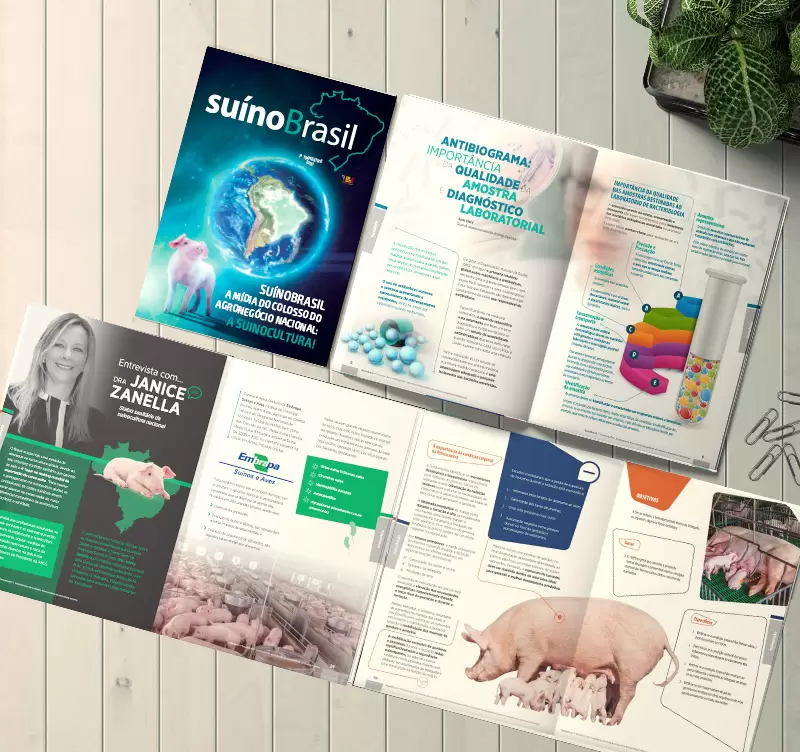
Subscribe now to the technical pig magazine
AUTHORS

Bifet Gracia Farm & Nedap – Automated feeding in swine nurseries

The importance of Water on pig farms
Fernando Laguna Arán
Microbiota & Intestinal Barrier Integrity – Keys to Piglet Health
Alberto Morillo Alujas
Impact of Reducing Antibiotic use, the Dutch experience
Ron Bergevoet
The keys to successful Lactation in hyperprolific sows
Mercedes Sebastián Lafuente
Addressing the challenge of Management in Transition
Víctor Fernández Segundo
Dealing with the rise of Swine Dysentery
Roberto M. C. Guedes
Actinobacillus pleuropneumoniae – What are we dealing with?
Marcelo Gottschalk
The new era of Animal Welfare in Pig Production – Are we ready?
Antonio Velarde
Gut health in piglets – What can we do to measure and improve it?
Alberto Morillo Alujas
Interview with Cristina Massot – Animal Health in Europe after April 2021
Cristina Massot
Differential diagnosis of respiratory processes in pigs
Desirée Martín Jurado Gema Chacón Pérez