The livestock industry is rapidly evolving, driven by market volatility, health challenges, and sustainability demands.




The global livestock industry is undergoing a period of profound transformation. Driven by volatile ingredient markets, escalating health concerns, and an urgent push toward environmental sustainability, feed manufacturers are facing unprecedented challenges.
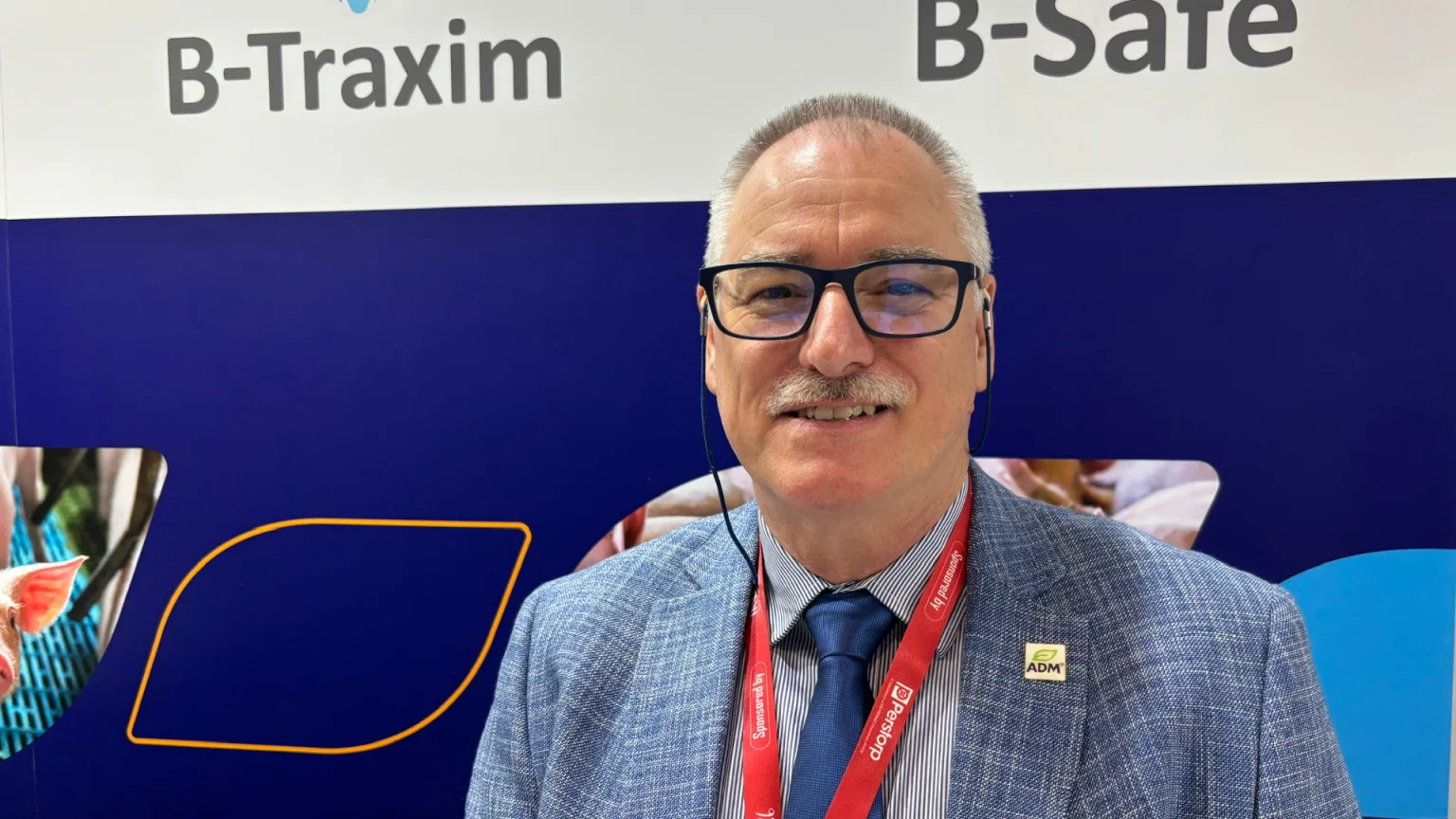
At the recent International Pig Veterinary Society (IPVS) 2026 congress, Dr. Hagen Schulze, Global Director CD&D Animal Nutrition, Feed Additives & Ingredients at ADM, sat down together with porciNews Asia and nutriNews Asia to discuss the evolving landscape of feed technology and how data, targeted biology, and a philosophical shift in formulation can unlock new levels of protein production efficiency.
Navigating the triple threat: Volatility, disease, and regulation
porciNews Asia: Feed manufacturers today are under immense pressure to improve efficiency while controlling costs. What are the biggest challenges you observe in feed production globally, and specifically within Asia?
Dr. Schulze: When we look at the current global landscape, and Asia in particular, the challenges can be distilled into three major categories.
First, we are dealing with intense health challenges. This is compounded by regulatory and market shifts that continue to reduce our traditional options, specifically through the restriction of antibiotic growth promoters, zinc oxide, and high copper usage.
Second, there is a tremendous amount of variability in raw materials. We are seeing increasing mycotoxin loads, which threaten both animal safety and performance.
Third, we are battling severe volatility in the supply and quality of raw materials and additives. This supply chain unpredictability makes maintaining a consistent, cost-effective output incredibly difficult for feed mills.
Mitigating risk and maximizing gut potential
How can feed additives help producers improve feed quality and production efficiency amidst these challenges?
Feed additives cover a broad spectrum of solutions, but their impact generally focuses on two areas: mitigating risk and optimizing animal biology.
From a quality perspective, specific additives are highly effective at reducing mycotoxin pressure and controlling bacterial risks like Salmonella. By cleaning up the feed, you automatically improve production efficiency.
On the biological side, additives can be selected to support the animal’s immune system or actively strengthen gut health, for instance, by reducing gut permeability and fortifying the intestinal barrier.
Additionally, certain solutions stimulate early feed intake and enhance overall nutrient digestibility. By targeting these specific physiological parameters, additives directly drive greater production efficiency.
The feed mill checklist: Processing stability and ingredient synergies
What are the key criteria feed mills should consider when selecting additive solutions?
Beyond looking for value for money, feed mills must prioritize stability during processing. Modern feed manufacturing processes can be incredibly harsh, involving high-temperature conditioning and pelleting. If an additive cannot survive the mill, it cannot deliver value on the farm.
Secondly, you have to look at the matrix interactions. Feed is a complex cocktail of raw materials and premixes. Feed mills must evaluate how a new additive interacts with existing ingredients.
Will other components deteriorate its shelf life? Will they reduce its bioactivity? Understanding these synergies and conflicts is critical to making the right choice.
The digital revolution: Moving beyond guesswork
How is digitalization, including artificial intelligence, changing the way feed producers manage quality and consistency?
Digitalization is a massive game-changer, and we are only seeing the beginning of its impact.
Today, we have sophisticated digital tools that allow us to quickly analyze the nutritional profile and quality of every single raw material consignment that arrives at the feed mill.
With this real-time data, we can move away from static, rigid feed formulations and move toward highly accurate, dynamic adjustments. Furthermore, digital tools allow us to screen for potential threats like mycotoxins in a very timely manner.
If you know exactly what is in your raw materials and which risks are present, you can take precise, preventative action. This greatly elevates both the quality and consistency of the final feed.
Balancing the sustainability equation
Sustainability has become a major focus across the livestock industry. How can additive technologies contribute to more sustainable feed production?
Sustainability in feed production can be approached from two distinct angles. The first is the utilization of regional resources and industrial byproducts. By leveraging advanced feed enzymes, we can significantly improve the digestibility of alternative, locally available raw materials. This allows feed mills to formulate sustainable diets using local ingredients without compromising animal performance.
The second angle is resource efficiency and reducing environmental excretion. For example, in our mineral portfolio, we utilize highly bioavailable, glycine-bound trace minerals. Because these trace minerals are highly bioavailable, feed formulators can drastically lower the inclusion levels in the diet while achieving the exact same performance results. Lower dietary inclusion directly translates to fewer heavy metals excreted into the environment, ticking a major sustainability box.
Looking to 2031: The age of tailor-made nutrition
Looking ahead, what trends do you expect to shape the future of feed manufacturing over the next five years?
This links back directly to digitalization. Over the next five years, our analytical tools will become even faster and more precise. We will have a much clearer view of the exact raw material variations and the specific health situations occurring on individual farms.
As a result, the future of feed will be all about tailor-made solutions. Instead of producing a generic diet, we will formulate feed that meets the exact biological needs of the animal based on real-time farm conditions and raw material profiles. This level of customization will drastically reduce performance variability across herds, driving up overall industry productivity. It is the next big evolution in nutrition.
A philosophical shift: Biological risk management
What core message would you like to share with livestock producers and industry stakeholders attending IPVS 2026?
My main message is that we need a fundamental shift in how we approach feed formulation. We can no longer view feed formulation simply as a “least-cost spreadsheet” exercise.
We must look at feed formulation through the lens of biological risk management.
We need to actively formulate diets that address the root causes of performance variation. This means proactively managing the animal’s immune status and protecting the gut barrier to avoid systemic health issues down the road.
Furthermore, this approach must start early, not just with the piglet, but by properly nourishing the sow so her offspring are set up to thrive from day one.
The horizon of innovation: The rise of postbiotics
Finally, what innovations or developments from ADM should the industry watch for in the coming years?
The industry should keep a very close eye on the rapidly evolving field of postbiotics. For a long time, postbiotics were primarily associated with yeast-derived products, such as hydrolyzed or killed yeast cells split into various functional fractions.
At ADM, we are taking this to the next level by focusing heavily on specifically grown, target-selected bacteria. We identify and cultivate specific bacterial strains known to generate highly beneficial metabolites, which are then inactivated to create incredibly stable, targeted functional solutions. Dedicated fermentation and next-generation postbiotics will pave the way for highly predictable, solution-oriented health and nutrition programs.
Subscribe now to the technical pig magazine
AUTHORS

Bifet Gracia Farm & Nedap – Automated feeding in swine nurseries

The importance of Water on pig farms
Fernando Laguna Arán
Microbiota & Intestinal Barrier Integrity – Keys to Piglet Health
Alberto Morillo Alujas
Impact of Reducing Antibiotic use, the Dutch experience
Ron Bergevoet
The keys to successful Lactation in hyperprolific sows
Mercedes Sebastián Lafuente
Addressing the challenge of Management in Transition
Víctor Fernández Segundo
Dealing with the rise of Swine Dysentery
Roberto M. C. Guedes
Actinobacillus pleuropneumoniae – What are we dealing with?
Marcelo Gottschalk
The new era of Animal Welfare in Pig Production – Are we ready?
Antonio Velarde
Gut health in piglets – What can we do to measure and improve it?
Alberto Morillo Alujas
Interview with Cristina Massot – Animal Health in Europe after April 2021
Cristina Massot
Differential diagnosis of respiratory processes in pigs
Desirée Martín Jurado Gema Chacón Pérez

To provide the best experiences, we use technologies like cookies...