The 2026 Agricultural Extension Dialogue in Hai Phong addressed key bottlenecks in safe, market-oriented livestock production.





The livestock sector in Vietnam is undergoing a major shift toward higher-quality production, with transparent traceability and stronger value-chain linkages emerging as key solutions for sustainable growth.
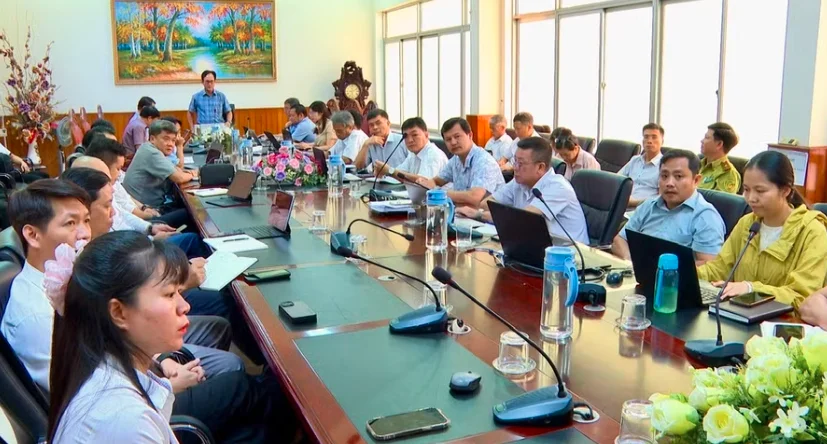
On August 14, in Hai Phong, the National Agricultural Extension Center, in coordination with the Hai Phong Department of Agriculture and Environment, held the 2026 Agricultural Extension Dialogue under the theme ‘Solutions for Developing Livestock Production Linked to Traceability and Product Market Linkages’.
The event brought together hundreds of delegates, including experts, scientists, representatives from government agencies, businesses, cooperatives, agricultural extension officers and farmers.
According to the National Agricultural Extension Center, livestock production plays a pivotal role in Vietnam’s agricultural sector by ensuring food supplies, creating employment and providing raw materials for the processing industry.


Despite the impacts of disease outbreaks and natural disasters, livestock production maintained positive growth in 2025:
However, as market requirements continue to rise, the sector needs to shift from growth driven primarily by production scale toward greater quality, efficiency and added value.
Vietnam’s Livestock Development Strategy for 2021-2030 emphasizes organizing production around value chains, linking production with processing and markets. Within this framework, traceability helps strengthen quality and disease-control systems, while market linkages provide the economic incentive for farmers to maintain accurate production data.
At its core, traceability should be built on a complete and reliable data system covering production, slaughtering, processing and distribution, not simply on labels or QR codes. By 2025, Hanoi had established 172 value-chain linkages and issued traceability codes for more than 14,000 products.
The Ministry of Agriculture and Environment also launched the Vietnam Agricultural Product Traceability System in late 2025 and issued an implementation plan in early 2026.
Through agricultural extension projects, a number of successful models have been replicated across the country:
Experience from these models has highlighted several important lessons. Traceability must begin with tightly controlled production at the farm level.
Organizing farmers into cooperatives is also critical, alongside early and sustained engagement from businesses. At the same time, the agricultural extension system serves as a key bridge for organizing stakeholders, connecting participants and improving the performance of the entire value chain.
Despite positive progress, livestock production linked to traceability still faces several challenges:
Le Quoc Thanh, Director of the National Agricultural Extension Center, welcomed the strong participation of representatives from government agencies, research institutes, businesses and leading farmers from Hai Phong, Quang Ninh and Hung Yen.
He called on delegates to focus discussions on addressing three core issues:
Speaking at the dialogue, Vu Ba Cong, Deputy Director of the Hai Phong Department of Agriculture and Environment, said that in 2025:
Alongside this production scale, Hai Phong has gradually established a foundation for commercial and safe livestock production, with 18 concentrated livestock production areas, around 200 efficiently operated farms, 100 disease-free certified facilities and 88 OCOP-certified livestock products.
Several facilities have adopted VietGAHP standards and QR-code-based traceability.
The city has also planned 50 concentrated livestock production zones and areas linked to high-tech slaughtering facilities by 2040, with a vision toward 2050.
“The Hai Phong Department of Agriculture and Environment is committed to continuing its cooperation with the National Agricultural Extension Center, central agencies, local authorities, businesses, cooperatives, scientists and livestock producers to standardize production, improve quality, promote traceability, develop value-chain linkages and expand markets, thereby increasing the value and competitiveness of Hai Phong’s livestock products,” Vu Ba Cong emphasized.
Closing the dialogue, Le Minh Linh, Deputy Director of the National Agricultural Extension Center, said the center would fully review and consolidate the recommendations and proposals raised during the event to advise the Ministry of Agriculture and Environment.
The center will also continue working closely with local authorities, businesses and cooperatives to promote value-chain-based livestock production, strengthen food safety and improve market access and product distribution.




Subscribe now to the technical pig magazine
AUTHORS

Bifet Gracia Farm & Nedap – Automated feeding in swine nurseries

The importance of Water on pig farms
Fernando Laguna Arán
Microbiota & Intestinal Barrier Integrity – Keys to Piglet Health
Alberto Morillo Alujas
Impact of Reducing Antibiotic use, the Dutch experience
Ron Bergevoet
The keys to successful Lactation in hyperprolific sows
Mercedes Sebastián Lafuente
Addressing the challenge of Management in Transition
Víctor Fernández Segundo
Dealing with the rise of Swine Dysentery
Roberto M. C. Guedes
Actinobacillus pleuropneumoniae – What are we dealing with?
Marcelo Gottschalk
The new era of Animal Welfare in Pig Production – Are we ready?
Antonio Velarde
Gut health in piglets – What can we do to measure and improve it?
Alberto Morillo Alujas
Interview with Cristina Massot – Animal Health in Europe after April 2021
Cristina Massot
Differential diagnosis of respiratory processes in pigs
Desirée Martín Jurado Gema Chacón Pérez