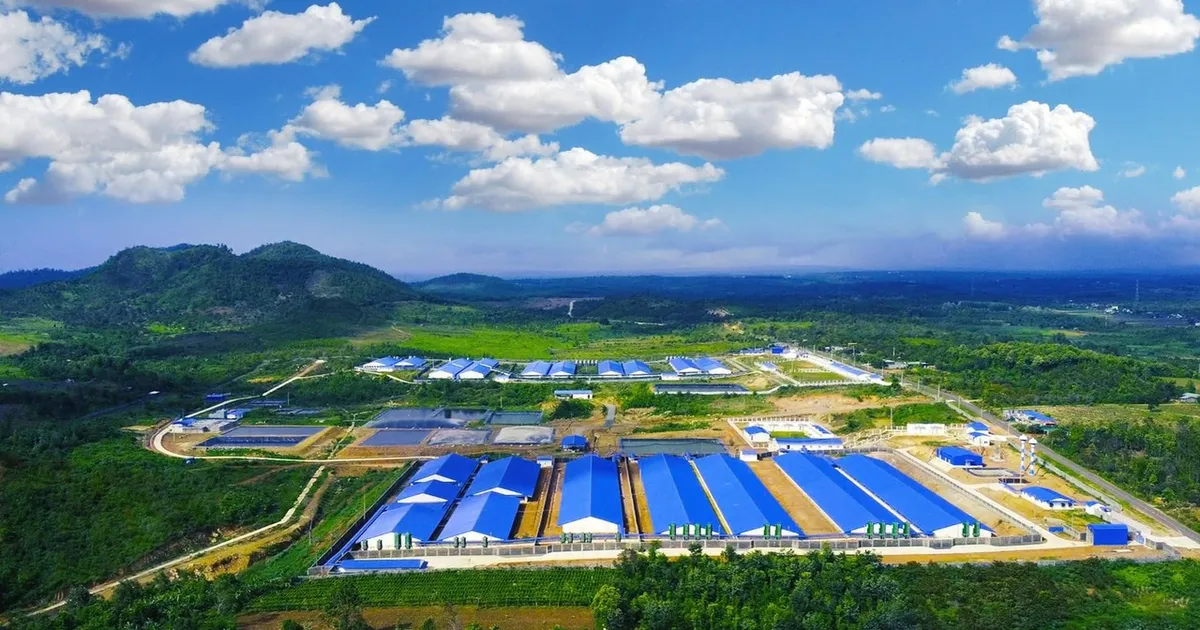
Gia Lai Province currently has 6 linkage chains connecting businesses and livestock farmers, with a total of 208 participating farms.




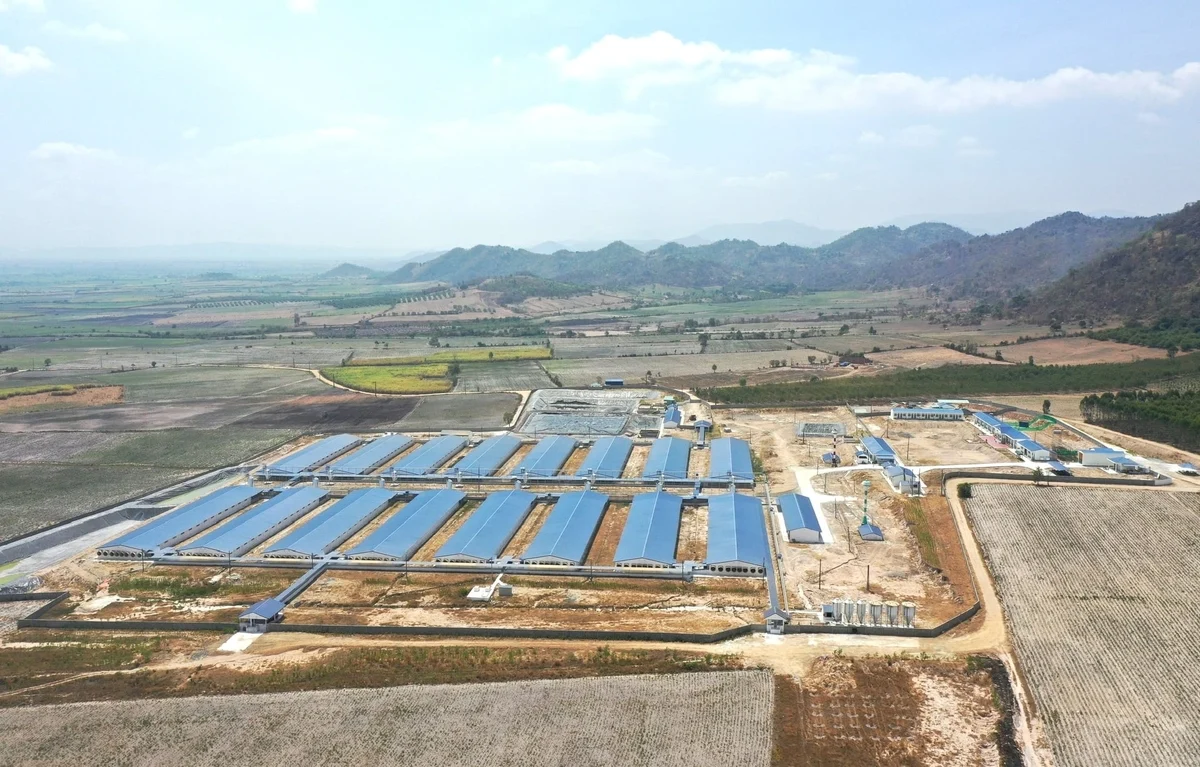
In Vietnam, Gia Lai Province is gradually building a modern livestock industry through six linkage chains connecting businesses and farmers, with the participation of 13 cooperatives, helping improve production efficiency and strengthen market competitiveness.
According to the Gia Lai Department of Livestock Production and Animal Health, the province currently has 6 linkage chains connecting businesses and livestock farmers, involving a total of 208 farms.
In addition, 13 cooperatives are operating under these value-chain models, including 3 goat farming cooperatives, 3 beekeeping cooperatives, 4 pig farming cooperatives, 2 poultry farming cooperatives, and 1 bird’s nest farming cooperative.
The development of these linkage chains has helped farmers secure stable market outlets, reduce market-related risks, and gain access to advanced production practices.

At the same time, the model enables farming households to improve productivity, enhance product quality, and achieve more sustainable income growth.
Alongside the expansion of linkage chains, Gia Lai’s livestock sector is placing greater emphasis on quality-certified production.
Currently, the province has 25 livestock facilities certified under VietGAP and GlobalGAP standards.
To date, Gia Lai has 804 active livestock farms and projects.
Industrial-scale and farm-based livestock production account for more than 32% of the province’s total livestock population, contributing to improved production efficiency and better alignment with market demand.
In the first quarter of 2026, all major livestock categories in the province recorded positive growth compared to the same period last year.
Specifically, the cattle herd reached approximately 793,400 heads, up 1.8%; the pig population reached 1.75 million heads, an increase of 8.3%; while the poultry flock totaled 18.4 million birds, up 8.5%.
These figures indicate that Gia Lai’s livestock industry continues to maintain stable growth while steadily expanding its production capacity.
In the coming years, Gia Lai’s agricultural sector will continue encouraging businesses to participate in contract livestock farming, expand product marketing partnerships, and support farmers in adopting high-tech livestock production methods.
The province will also promote the adoption of biosecurity measures, environmental protection solutions, and product quality improvements to enhance the competitiveness of its livestock industry in both domestic and export markets.
The expansion of linkage chains combined with the application of modern technologies is expected to provide a strong foundation for the sustainable development of Gia Lai’s livestock sector in the years ahead.




Subscribe now to the technical pig magazine
AUTHORS

Bifet Gracia Farm & Nedap – Automated feeding in swine nurseries

The importance of Water on pig farms
Fernando Laguna Arán
Microbiota & Intestinal Barrier Integrity – Keys to Piglet Health
Alberto Morillo Alujas
Impact of Reducing Antibiotic use, the Dutch experience
Ron Bergevoet
The keys to successful Lactation in hyperprolific sows
Mercedes Sebastián Lafuente
Addressing the challenge of Management in Transition
Víctor Fernández Segundo
Dealing with the rise of Swine Dysentery
Roberto M. C. Guedes
Actinobacillus pleuropneumoniae – What are we dealing with?
Marcelo Gottschalk
The new era of Animal Welfare in Pig Production – Are we ready?
Antonio Velarde
Gut health in piglets – What can we do to measure and improve it?
Alberto Morillo Alujas
Interview with Cristina Massot – Animal Health in Europe after April 2021
Cristina Massot
Differential diagnosis of respiratory processes in pigs
Desirée Martín Jurado Gema Chacón Pérez

To provide the best experiences, we use technologies like cookies...