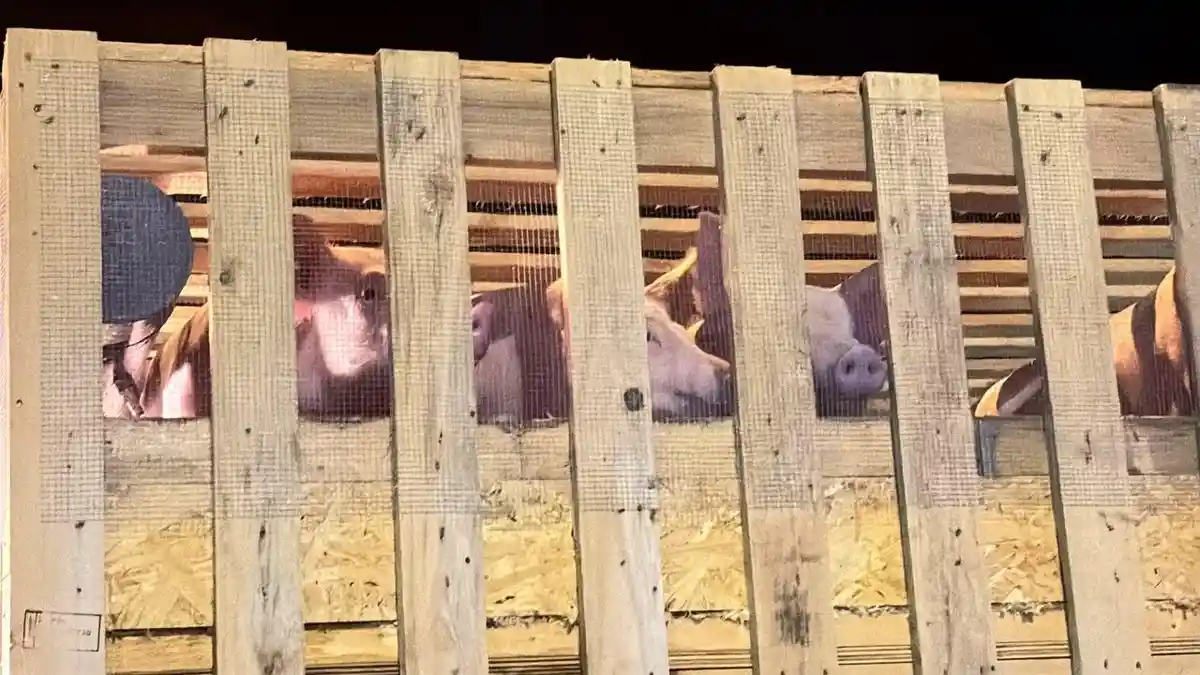
Oversupply and sluggish demand weigh on China’s pork market, but capital continues fueling expansion among dominant hog enterprises.





China’s pork giants are pressing expansion even as authorities urge restraint. In 2025, 39 enterprises slaughtering over one million hogs produced 295 million head, accounting for 41% of national output. Nearly all increased production, many with double‑digit growth. Smaller farms cut output, underscoring consolidation across the sector.
Government meetings in 2025 sought to cap sow numbers and cancel subsidies. Yet companies pressed ahead, aiming to spread fixed costs across larger volumes. The result is persistent oversupply, despite modest sow inventory declines late in the year.
Oversupply has collided with weak consumer demand. Average hog prices fell 25% year-on-year by December 2025, with consumer pork prices down 14.6%, the steepest decline among food categories.
Food service traffic has slowed, and competing proteins—poultry, beef, lamb—undermine pork consumption. Even seasonal peaks failed to lift prices. The traditional hog cycle remains disrupted, leaving companies struggling to balance volume gains against revenue losses.


Three firms dominate expansion:
Twins’ strategy emphasizes low margins and high volume. By absorbing Zhengbang’s assets and pursuing an IPO, it aims to surpass Wens and challenge Muyuan. Analysts expect Twins to leverage feed cost advantages and supply chain investments to reshape competition.
Most hog giants are also major feed manufacturers. Twins, already the world’s largest pig feed producer, is consolidating control over feed sources. Competitors like Haid and New Hope face pressure to match its cost efficiencies.
This integration strengthens the “company + farmer” model, recruiting independent producers while tightening control over inputs. Analysts predict further consolidation, with mid-size firms struggling to survive against giants with scale economies and capital access.
Despite losses, investment continues flowing into the sector. Capital controls, banking policies, and the collapse of property markets channel funds into livestock. Companies endure downturns, waiting for the next profitable cycle.
The industry’s resilience reflects both financial structures and entrenched expectations. Even bankrupt firms like Zhengbang reemerge through mergers, underscoring the persistence of overcapacity.



Subscribe now to the technical pig magazine
AUTHORS

Bifet Gracia Farm & Nedap – Automated feeding in swine nurseries

The importance of Water on pig farms
Fernando Laguna Arán
Microbiota & Intestinal Barrier Integrity – Keys to Piglet Health
Alberto Morillo Alujas
Impact of Reducing Antibiotic use, the Dutch experience
Ron Bergevoet
The keys to successful Lactation in hyperprolific sows
Mercedes Sebastián Lafuente
Addressing the challenge of Management in Transition
Víctor Fernández Segundo
Dealing with the rise of Swine Dysentery
Roberto M. C. Guedes
Actinobacillus pleuropneumoniae – What are we dealing with?
Marcelo Gottschalk
The new era of Animal Welfare in Pig Production – Are we ready?
Antonio Velarde
Gut health in piglets – What can we do to measure and improve it?
Alberto Morillo Alujas
Interview with Cristina Massot – Animal Health in Europe after April 2021
Cristina Massot
Differential diagnosis of respiratory processes in pigs
Desirée Martín Jurado Gema Chacón Pérez