The breeder pigs arrived at Sam Ratulangi Airport in Manado, Nort Sulawesi Province on July 7.




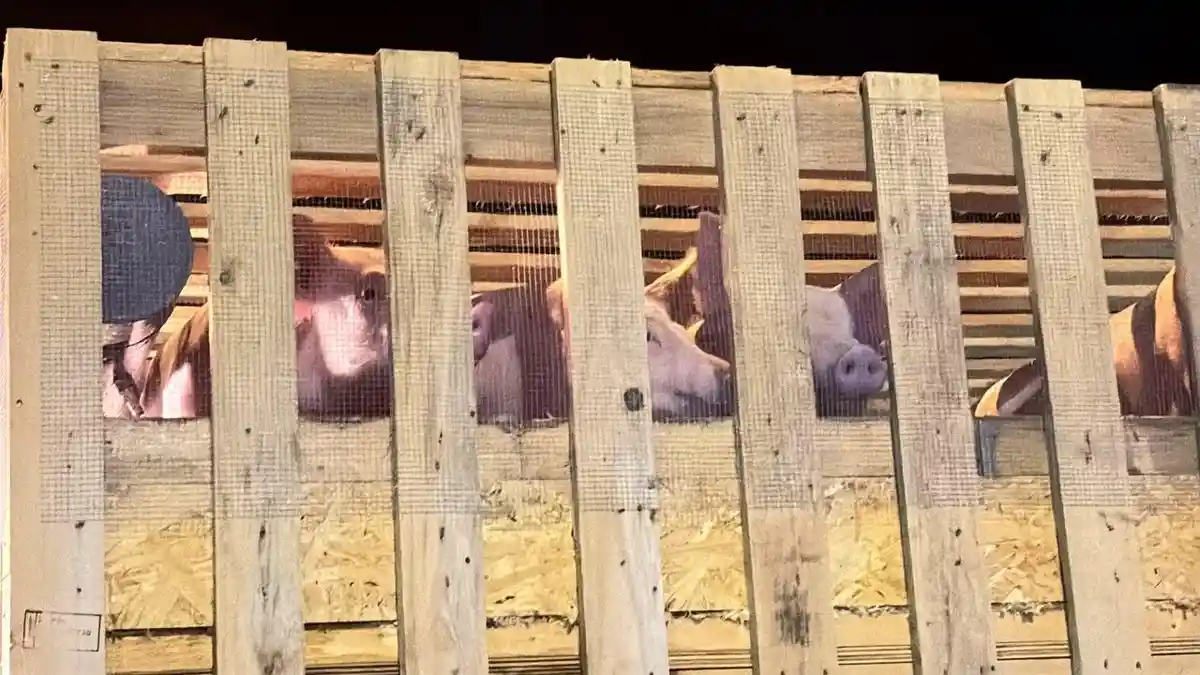
Indonesia has imported 546 breeder pigs from Denmark for the first time, seeking to accelerate the recovery of a national pig population that has yet to rebound from the African swine fever (ASF) outbreak that began in 2019.
The breeder pigs arrived at Sam Ratulangi Airport in Manado, Nort Sulawesi Province on July 7. Upon arrival, quarantine officers conducted document and physical inspections before the pigs were transported in sterilized vehicles to an animal quarantine installation for observation and further laboratory testing.
Before departing for Indonesia, all of the breeder pigs had also undergone a 20-day quarantine period in Denmark as part of disease-control procedures.
Rebuilding national pig population

Sauland Sinaga, Indonesian Monogastric Association (AMI) Chairman, told Jakarta Globe that the arrival of the breeder pigs marked an important step toward rebuilding the country’s pig population and improving farm productivity.
According to Dr Sauland, Indonesia has lost around 4 million pigs, equivalent to roughly 400,000 breeding sows, since ASF struck the country. The outbreak has continued to weigh on the supply of breeding stock and domestic pork production.
“This is the first time Indonesia has imported breeder pigs from Denmark. It is a positive first step toward accelerating the recovery of the national pig population after it was hit by ASF,” he said.
Indonesia-Denmark cooperation
Dr Sauland said the imports resulted from cooperation between the Indonesian and Danish governments, with private-sector involvement in procuring the breeding stock.
He explained that all imported breeder pigs had undergone stringent health procedures and were certified free from various animal diseases, including ASF. Danish veterinary authorities conducted inspections before shipment, while Indonesian quarantine officers carried out document and physical checks upon arrival.
He continued that Denmark is widely recognized for producing high quality pig genetics. The imported animals have high biosecurity standards, rapid growth rates, efficient feed conversion, and superior meat quality.
“The combination of Landrace and Yorkshire genetics is among the best options for accelerating the recovery of Indonesia’s pig population,” said Dr Sauland.
Improving farm productivity
Beyond rebuilding the population, the introduction of superior breeding stock is expected to improve farm productivity.
Dr Sauland revealed that a sow in Indonesia currently produces an average of only eight marketable piglets per litter, while Landrace-Yorkshire crossbred stock could potentially produce up to 14 piglets per litter.
Higher productivity could improve farmers’ incomes while accelerating efforts to meet demand for breeding stock across different regions, he added.
Good for North Sulawesi
Gilbert Wantalangi, North Sulawesi Pig Farmers Association Chairman, said the breeder pig import is a benefit the province since it will accelerate the pig repopulation and increase supply of finisher pigs.
“In the last three years, ASF killed half of the total pig population in North Sulawesi. We believe with the new genetics, our province will be a pig production center in Indonesia,” he said.
Mr Wantalangi revealed that due to ASF, current market demand for pigs has reduced to only 5,000 heads/month from the pre-ASF level of 10,000 heads/month.
While the local supply is not yet back to normal because many farmers are still traumatized by ASF, the province imports from other provinces including Bali and North Sumatera to meet local market demand for pork.





Subscribe now to the technical pig magazine
AUTHORS

Bifet Gracia Farm & Nedap – Automated feeding in swine nurseries

The importance of Water on pig farms
Fernando Laguna Arán
Microbiota & Intestinal Barrier Integrity – Keys to Piglet Health
Alberto Morillo Alujas
Impact of Reducing Antibiotic use, the Dutch experience
Ron Bergevoet
The keys to successful Lactation in hyperprolific sows
Mercedes Sebastián Lafuente
Addressing the challenge of Management in Transition
Víctor Fernández Segundo
Dealing with the rise of Swine Dysentery
Roberto M. C. Guedes
Actinobacillus pleuropneumoniae – What are we dealing with?
Marcelo Gottschalk
The new era of Animal Welfare in Pig Production – Are we ready?
Antonio Velarde
Gut health in piglets – What can we do to measure and improve it?
Alberto Morillo Alujas
Interview with Cristina Massot – Animal Health in Europe after April 2021
Cristina Massot
Differential diagnosis of respiratory processes in pigs
Desirée Martín Jurado Gema Chacón Pérez


To provide the best experiences, we use technologies like cookies...